At a glance
A side-by-side look at the picks in this guide. Always check the live Amazon listing for current specifications and price.
Swipe sideways to see the full table.
| Pick | Best for | What stands out | Worth knowing | Check price |
|---|---|---|---|---|
| Escape-Resistant Cat Harness & Leash Set | Confident cats learning to walk outdoors | Adjustable chest and neck straps for a closer fit | Not every cat enjoys wearing a harness | See It on Amazon |
| Cat Training Clicker Positive Reinforcement Training Tool | Treat-led training and positive reinforcement | Clear click sound is easy to mark good behaviour | Requires consistent timing to be useful | See It on Amazon |
| Airtag Cat Collar Breakaway, Reflective Collar with Air Tag Holder | Everyday identification | Breakaway clasp releases if the collar catches | The bell can be removed if it annoys the cat | See It on Amazon |
| Vital Essentials Freeze Dried Cat Treats, Chicken Breast, 2.1 oz Bag | Training and high-value rewards | One ingredient: cooked chicken breast | Not a complete meal | See It on Amazon |
Cat harness and leash training works best as a slow handling exercise, not a walk you attempt on day one. Some cats can learn to comfortably wear a well-fitted harness and explore a quiet garden on a leash; others tolerate the harness indoors but never enjoy the outdoors. The plan is the same either way: introduce the harness at home, build short positive sessions, add a lightweight leash, and practise in a secure space before you go anywhere busy. This guide covers how to train a cat to use a harness and leash at the cat's pace. Never drag a cat or pull against a freeze. If your cat is fearful, stop and ask your vet or a behaviour professional for help.
As an Amazon Associate I earn from qualifying purchases. You can read our affiliate disclosure for the details.
Can you walk a cat on a harness?
Yes, some cats can be walked on a harness, and many enjoy sniffing a garden or sitting in the sun while attached to a person. But the internet makes it look more universal than it is. Cats are not small dogs: they are territorial, easily startled and often prefer a familiar window to an open pavement. A successful harness cat is usually confident, curious and comfortable being handled.
You can leash train a cat, but it is a negotiation rather than a command. Harness training is worth trying if your cat is relaxed about handling and shows interest in the outdoors. It is not a failure if they dislike it. A secure window perch, a screened balcony or a catio can provide outdoor sights and smells without a leash. The goal is a richer life for the cat, not a photo opportunity.
Never put a cat on a leash to force outdoor time. A cat that is scared and cannot escape is at risk of slipping the harness, bolting or injuring itself. If your cat panics, the session is over.
Best cat harness for leash training
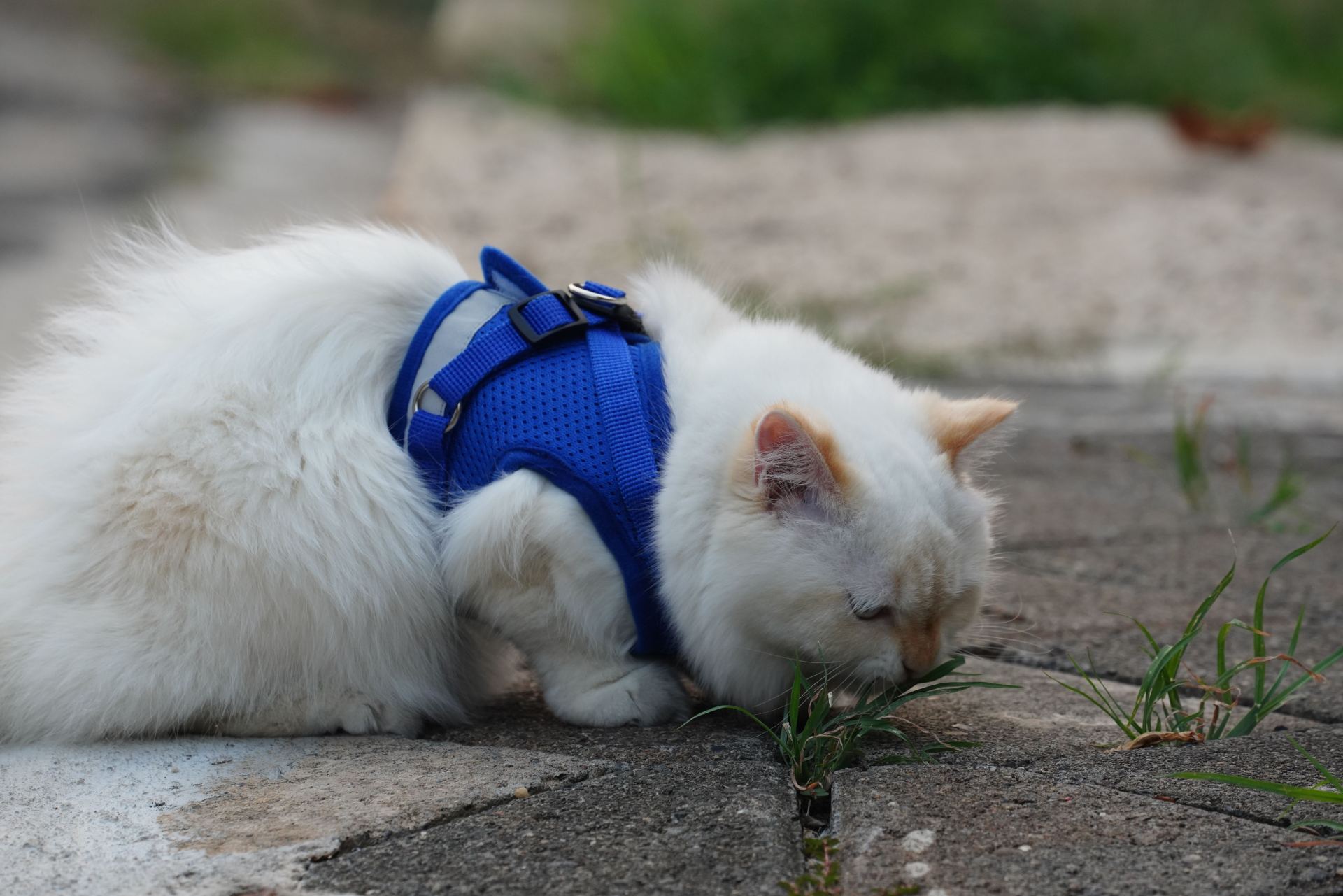
Look for adjustable neck and chest straps, secure buckles and a leash attachment on the back. An H-style or vest-style harness spreads pressure across the body better than a thin strap across the throat. Lightweight fabric, reflective stitching and easy-clean materials are practical extras. You can compare shapes in our collars and carriers category.
Fit matters more than style. Measure your cat's chest girth behind the front legs and compare it with the size chart. The harness should be snug enough that the cat cannot back out, but loose enough for full shoulder movement. Two fingers should fit under each strap, and the straps should not rub the armpits. Check the stitching and buckles before every outing.
No harness is truly escape proof. An escape proof cat harness is largely a marketing phrase; a determined cat can back out of many designs. Supervise every session, start in a secure space and check the fit before you go outside. A harness is a safety aid, not a guarantee.
Fit check before the first session
Put the harness on indoors, with the cat standing on a non-slip surface. Check the neck opening: it should not press on the throat. Check the chest straps: they should sit behind the front legs, not in the armpit. Watch the cat walk, turn and jump. If a strap slips out of place or the cat scratches at it repeatedly, adjust the fit or try another shape.
Kittens grow, so recheck the fit every few weeks. If your cat has a thick coat, check underneath the straps for rubbing; long fur can hide a sore patch. Do not leave a harness on an unsupervised cat.
Some cats do better with a vest-style harness; others prefer a simple H-style. The right one stays in place without restricting movement.
The training kit
You do not need much: a harness and leash, high-value treats, a clicker if you want one, and a breakaway collar for identification. A fixed-length leash is easier to manage than a retractable lead. A clicker is a marker, not a magic wand; it tells the cat which behaviour earned the treat.
Breakaway collars are for ID, not for walking. The release mechanism is designed to open if the collar catches on something, which is what you want in a garden but not at the end of a leash. Keep the collar on for identification if your cat is used to it, and attach the leash only to the harness. Some cats dislike the sound of a bell; if it bothers your cat, choose a quieter tag.
Treats should be small, smelly and easy to eat. Freeze-dried chicken bites are light and can be broken into tiny pieces. Count them as part of the day's food, and find what your cat values. A cautious cat may need something more special than kibble.
Step 1: make the harness boring
Cat harness training starts with familiarity, not restraint. Leave the harness on the floor where the cat can see and sniff it. Put a treat nearby, then on top of it. Do not put it on the cat yet. If the cat walks away, leave it there and try again later. The goal is for the harness to become a normal object, not a signal that something strange is about to happen.
Once the cat is comfortable approaching, touch the harness to their shoulder and give a treat. Lift a strap gently and let it fall. If the cat hides, you have moved too fast; go back a step and shorten the session.
This stage can take minutes or days. A cat that chooses to investigate is more likely to tolerate the harness than one that is caught and strapped in.
Step 2: wear it indoors for seconds
Put the harness on with calm, deliberate movements. Fasten the buckles, give a treat and distract with a toy or a small scatter of treats on the floor. Watch the cat's body language. A cat that walks around, eats and then settles is doing well. A cat that freezes, crouches or tries to bite the straps needs a shorter session.
Leave the harness on for a few seconds at first, then remove it before the cat becomes upset. Repeat later the same day or the next day, and build up gradually. If the cat flops over, do not drag them by the harness or leash. Let them lie there for a moment, then remove the harness and try again another time. Dragging teaches the cat to fight the harness.
Some cats object to the buckle or the feel of fabric across the shoulders. A different harness shape may help, as can putting it on just before a meal or play session.
Step 3: add the leash indoors
Once the cat will wear the harness for a minute or two without fussing, clip on a lightweight leash. Let the leash drag on the floor while you supervise. Do not pick it up immediately. Toss a treat a short distance away and let the cat walk to it, feeling the leash follow.
Next, pick up the leash with a loose hand and follow the cat around the room. Do not pull; if the cat stops, stop. If the cat looks back, reward. Practise a gentle recall with a treat or a clicker, but do not expect a dog-style heel. The cat decides the route; you keep the leash slack and the environment safe.
Keep sessions short and end before the cat loses interest; a minute of calm walking beats five minutes of wrestling. If the cat chews the leash, redirect to a toy.
Step 4: practise at the door
When the cat is comfortable walking around the room in the harness and leash, move to a doorway. Open the door and let the cat look out. Reward curiosity. Do not push the cat through. If the cat steps out, follow at their pace and keep the leash loose.
The first outdoor space should be quiet and enclosed: a secure garden, a courtyard or a hallway that is not open to traffic. Check the perimeter before you start. Look for gaps in fences, dogs, cars, sharp objects and plants your cat might chew. Bring treats and a towel, and keep the session short. If the cat wants to go back inside, open the door and let them.
Some cats explore immediately; others need several sessions on the threshold. Both are fine. The purpose is to add an environment without adding fear, so let the cat retreat. A cat that is terrified in the garden may do better with a carrier visit and the door kept closed.
Step 5: your first walk
Choose a quiet time of day and a route you know. Early morning or after the school run is often calmer than midday. Avoid busy roads, dogs, building work and crowds. Let the cat lead, sniff and stop. A walk may be ten minutes of standing still while the cat watches a leaf; that is normal cat walking.
Watch the body language. A confident cat holds the tail up, moves smoothly and investigates. A worried cat crouches, tucks the tail, flattens the ears, freezes or tries to back out of the harness. If you see those signs, go home. Do not pick the cat up by the leash or pull them along. A short positive outing is better than a long stressful one.
Build a routine: same time, same route, same calm handling. Some cats walk further over time; others are happy with the garden. The leash keeps the cat safe; it is not a performance.
Safety rules for outdoor walks
Never tie a cat out or leave them unattended on a leash. A cat can tangle, bolt or be approached by a dog with no one to intervene. Keep the leash in your hand and your attention on the cat, not your phone.
Check the weather. Hot pavement can burn paws, and a dark-coated cat can overheat quickly; cold, wet days are uncomfortable too. Avoid areas where dogs run off-leash. Keep your cat away from puddles, rubbish and unknown plants; some are toxic, so ask your vet about specific risks.
Make sure the cat has ID: a microchip and an up-to-date tag on a breakaway collar. Ask your vet about parasite prevention and keep vaccinations current. A harness is not a substitute for a carrier in a car; read our guide to traveling with a cat by car.
When your cat refuses or panics
Not every cat wants to walk on a leash, and a cat that panics is not being difficult. Stop the session, remove the harness if the cat is safe to handle, and let them retreat to a quiet place. Do not chase, scold or force the harness back on. Try again another day with a shorter, easier step.
If your cat is fearful of the harness itself, work on handling and positive associations first. If your cat is fearful outside, stay indoors or in a secure garden and let them choose the distance. A vet check is sensible if the fear is new or severe, because pain or illness can change behaviour. A qualified cat behaviour professional can help with a gradual plan.
Never use a harness to drag a cat out from under a bed or to restrain a cat for punishment. That destroys trust and makes future handling harder. If you need to move a frightened cat, use a towel or a carrier and ask your vet for advice.
Harness training for anxious cats
An anxious cat may still benefit from harness training, but the pace should be slower and the goal smaller. Start with the harness on the floor, then a few seconds of wearing it indoors. Do not add the leash until the cat is relaxed. A pheromone spray or a calm routine can support the process, but these products are not sedatives and results vary. Our guide to cat anxiety and calming products explains the difference.
If your cat is anxious about the outdoors, a window perch or a secure catio may be kinder than a walk. The point is choice: a cat that can retreat is more likely to explore than a cat that feels trapped.
Senior cats and outdoor access
Older cats can still enjoy a supervised garden visit if they are mobile and comfortable, but they need a vet check first. Arthritis, vision changes and heart or breathing conditions can affect how much exercise is safe. Choose a flat route, avoid slippery steps and keep sessions short. A senior cat may prefer a warm, ground-level perch to a walk.
Our guide to best products for senior cats covers low-entry beds and easier access at home. If your cat has slowed down or seems stiff after a walk, ask your vet whether the routine needs adjusting.
Alternatives if your cat hates the harness
A window perch, a screened balcony, a catio or a secure carrier trip to a quiet garden can provide outdoor enrichment without a leash. Indoor play, puzzle feeders and a rotation of toys can cover the hunting and problem-solving side. Browse our cat toys category for ideas, and our collars and carriers category for harnesses and carriers.
Some cats enjoy being carried outside in a secure carrier with the door closed; they can watch and smell without the pressure of walking. Others prefer a stroller designed for pets. None of these is a consolation prize. The best enrichment is the one your cat actually enjoys.
Our shortlist
These four picks cover the training basics: a harness and leash set, a clicker for marking calm behaviour, a breakaway collar for ID and a high-value treat for rewards. We look for adjustable straps, secure hardware and simple designs. We have not tested every harness on every cat, and we do not invent ratings. Check the size chart, weight range and buckle type on the live Amazon listing before you buy, and introduce each item slowly.


A slow plan is the only plan
Harness training is a skill built in small, calm repetitions. Fit the harness properly, start indoors, add the leash without tension, and let the cat set the pace. Some cats will walk confidently in a garden; others will be happiest watching from a window. Both outcomes are fine. The measure of success is a cat that feels safe, not a cat that tolerates a walk for the sake of a photograph.
Related guides
- Cat anxiety and calming products for gentle support when your cat is worried.
- Traveling with a cat by car for carrier safety and calmer journeys.
- Best products for senior cats for older cats who need a gentler routine.
Common questions
Can you walk a cat on a harness?
Some cats can and do enjoy it, but it is not a universal cat activity. Confidence, temperament and early practice matter. A cat that freezes, hides or panics in a harness is telling you the outdoors is not fun yet. Start indoors, keep sessions short and accept that a window perch or a secure catio may be a better fit for your cat.
What is the best cat harness for leash training?
Look for a well-fitted harness with adjustable neck and chest straps, secure buckles and a leash attachment on the back. An H-style or vest-style harness distributes pressure better than a thin strap across the throat. No harness is truly escape-proof, so supervise and check the fit before every outing. Measure your cat’s chest girth rather than guessing by weight.
How long does cat harness training take?
There is no fixed schedule. Some cats accept a harness in a week; others need weeks or months of short sessions, and some never relax outside. Build from seconds to minutes indoors, then add the leash, then a quiet outdoor space. Stop while the cat is still calm. Rushing usually sets the process back.
Can I attach a leash to a cat collar?
No. A breakaway collar is designed to release under pressure, which makes it unsafe for walking, and a fixed collar can injure the neck if the cat pulls. Use a harness for the leash and keep a breakaway collar for identification only. Check that the ID tag is current and that the microchip details are up to date.
Why does my cat lie down in the harness?
A cat that flops or freezes is usually overwhelmed by the new sensation, not being stubborn. Do not drag or lift the cat by the leash. Remove the harness, let the cat reset, and try again later with a shorter session and better treats. If the response is extreme or persists, ask your vet or a behaviour professional whether a different approach is kinder.
Is a retractable leash good for cats?
A fixed-length, lightweight leash gives you more control. Retractable leashes can lock suddenly, make a noise and allow too much distance near roads or dogs. A cat can also bolt to the end of a long line before you react. Choose a simple leash with a secure clip and keep it short in unfamiliar places.
Browse the full shortlist
Independent picks, live prices on Amazon, no account needed here.